Rising Complexity, Smarter Delivery: A PMO Look Back at 2025
 By Melissa Barras, PMO Solutions
Rising Complexity, Smarter Delivery: A PMO Look Back at 2025
If one message defined 2025, it was this: The complexity of organisational delivery rose faster than the capability required to manage it.
Across industries, particularly capital intensive and public-sector environments, we saw organisations facing an uncomfortable truth. Their governance frameworks, decision-making processes, and delivery practices were no longer fit to support the scale, pace and strategic pressure of their investment portfolios.
2025 became a year of reckoning. A year where governance and delivery finally collided. A year where aspirational strategies met organisational reality. And for PMOs, it was the year that transformed their purpose.
The Governance–Delivery Reckoning: What Organisations Could No Longer Ignore
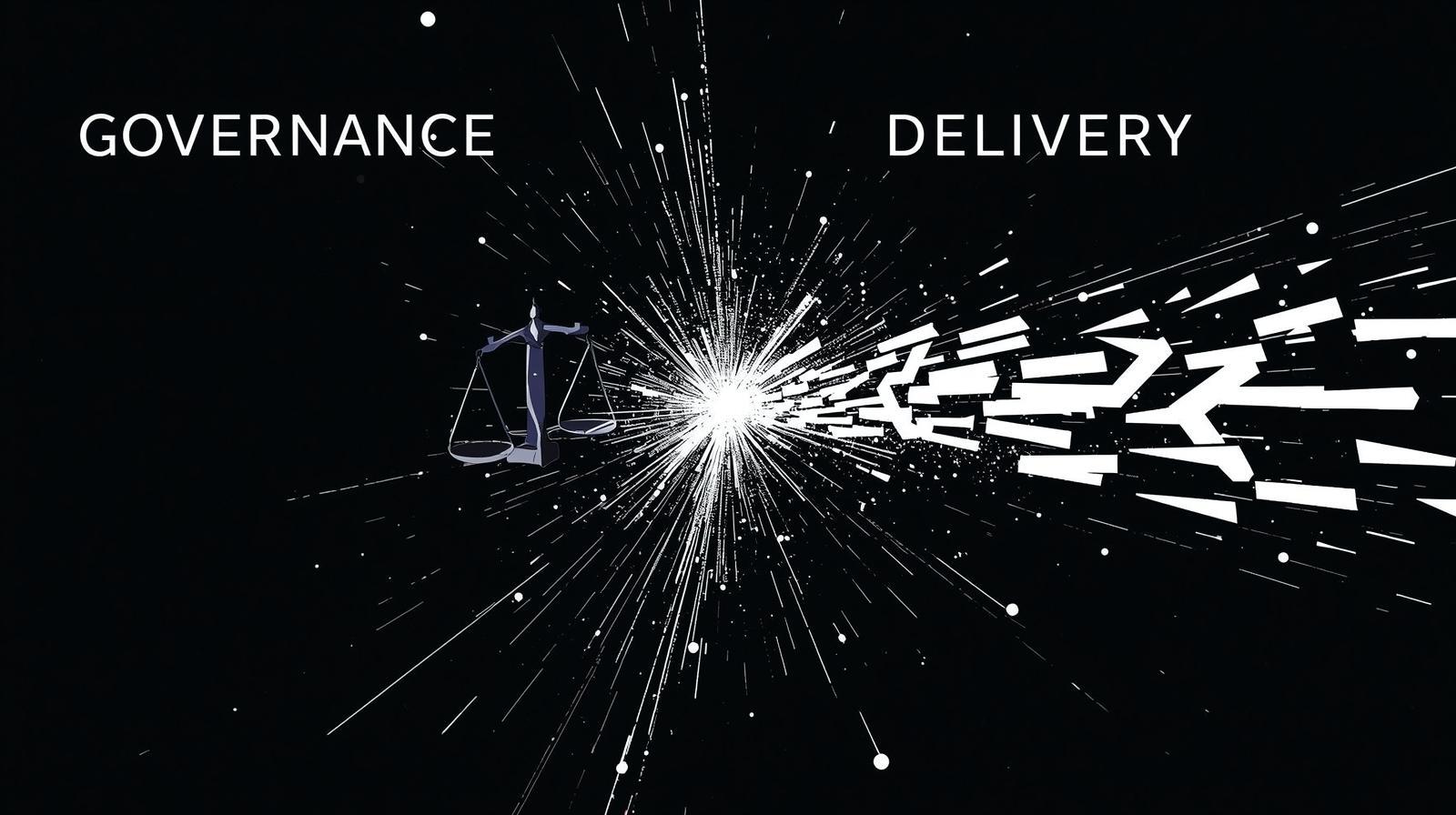
Many organisations entered 2025 with delivery challenges they had managed to work around for years, unclear accountabilities, frameworks that looked impressive on paper but weren’t embedded, inconsistent project practices, and governance models that lacked teeth.
But as capital portfolios grew, digital ambitions expanded, regulatory expectations tightened, and resource constraints intensified, the cracks became impossible to ignore. Three patterns stood out:
- Governance intent did not match operational reality: Many organisations believed they had strong governance simply because they had documentation. In 2025, Executives realised that frameworks without adoption do not create delivery confidence.
- Portfolio visibility was too shallow to inform real decisions: Most organisations could report project status but could not reliably answer:
- What are our constraints?
- What are the real risks to our strategy?
- What are the trade-offs we must make?
The gap between “activity reporting” and “decision support” became painfully obvious.
- PMOs were expected to step up, quickly: When Executive teams needed clarity, consistency, and confidence, they turned to the PMO. Not to administer, but to lead.
This marked a turning point for the profession.
Portfolio Tension: Demand Increasing, Capacity Decreasing. The Defining Reality of 2025
In nearly every organisation we worked with, one truth dominated the year:
Demand outstripped delivery capacity.
Teams were inundated with investment ideas, competing priorities, and shifting expectations. Yet headcount, capability, and time remained fixed. This tension forced organisations to confront several misconceptions:
- “Prioritisation” is not sequencing.
- “Business cases” do not equal strategy alignment.
- “More projects” does not mean “more value”.
- “We’ll find a way” is not a delivery strategy.
As a result, PMOs became the portfolio conscience of the organisation. Helping navigate trade-offs, introduce evidence-based prioritisation, and challenge the assumption that everything can be delivered simply because it is desirable.
Portfolio governance matured from a theoretical construct into a practical necessity.
What PMOs Learned About Strategy Execution in 2025
If demand versus capacity defined the problem, strategy execution clarity defined the solution.
Organisations learned that strategy cannot simply be cascaded. It must be translated into a structured, governable and measurable portfolio of work. And PMOs often became the translators. 2025 saw a shift away from purely administrative PMOs to strategic enablement functions:
- PMOs became connectors: Bridging strategy, business units, finance, and delivery teams. Ensuring everyone understood the why, not just the what.
- PMOs became facilitators of organisational focus: Helping leaders make informed decisions about what not to do, not just what to pursue.
- PMOs became governance designers: Building fit-for-purpose frameworks, role clarity, stage gates and decision rights that could scale with organisational ambition.
- PMOs became capability builders: Coaching teams, uplifting project skills, embedding repeatable ways of working, and strengthening organisational muscle memory.
In short, PMOs finally stepped into their rightful role as strategy execution partners.
The Maturing Buyer: Clients Now Expect Value, Not Frameworks
Perhaps the most significant shift we observed in 2025 was not internal, but market driven. Clients became more discerning. Less willing to invest in theoretical frameworks. More focused on immediate, tangible value.
Organisations wanted:
- Fit-for-purpose governance, not off-the-shelf templates.
- Practical tools that people would actually use.
- Clarity and alignment before process depth.
- Capability uplift, not dependency on consultants.
- Partnership over prescription.
This change is reshaping the consulting landscape, favouring providers who are collaborative, adaptive and deeply human-centred in their approach. For PMOs, this shift means moving from “methodology custodians” to value creators. Driving early wins, building organisational confidence and demonstrating uplift from the very first engagement.
What 2026 Will Demand of PMOs
As we look ahead, the lessons from 2025 point clearly to what organisations will need in 2026:
- Continuous prioritisation, not annual planning: Dynamic portfolios require dynamic trade-offs.
- Lean, adaptive governance: Minimum effective control, maximum clarity.
- Data foundations before AI ambition: Organisations must build trustworthy information structures before automation or predictive analytics will add value.
- PMOs that can navigate people, not just processes: Strategy execution is human work. Facilitation, alignment, influence and leadership will matter more than templates.
- Capability uplift as a core part of every PMO model: Sustainable value is created when internal teams grow, not when consultants deliver in isolation.
- A clear line of sight from purpose → strategy → portfolio → delivery: PMOs will increasingly act as the guardians of this alignment.
Closing Reflection
2025 reminded us that complexity isn’t the enemy; ambiguity is. Organisations don’t need more process. They need clarity, confidence and the capability to make smarter decisions at speed.
As PMOs continue evolving into strategic partners, their role in shaping the future of organisational delivery has never been more essential.
And if 2025 taught us anything, it’s this: When complexity rises, the answer isn’t more governance. It’s better governance, smarter delivery and a PMO that knows how to bring both together.